




Do you look forward to Christmas as much as I do? For me, learning what is Advent calendar truly is makes every December morning feel special.
It’s not just about opening a door for candy or a toy; it’s a simple way for you and me to slow down and enjoy the season one day at a time. I love how each surprise, whether it’s a treat, a note, or a kind act, adds meaning to the countdown.
In this post, I’ll share the Advent calendar meaning, how you can use one, and creative ideas to make a version your family will love.
Together, we can make this Christmas season more mindful, joyful, and filled with moments that truly matter.
What is an Advent Calendar and How It Began
The Advent calendar’s meaning goes far beyond opening daily surprises; it’s a tradition rooted in faith and anticipation.
The practice began in 19th-century Germany, where families marked December days with chalk lines, candles, or small pictures to prepare for Christmas.
These early customs encouraged reflection and patience, helping both children and adults focus on the season’s spiritual message.
In the early 1900s, Gerhard Lang introduced the first printed Advent calendar with tiny doors hiding pictures or verses, spreading the idea throughout Europe.
After wartime pauses, it reemerged stronger, evolving into versions filled with chocolates, toys, and heartfelt messages.
These four themes, hope, peace, joy, and love, represent the four Sundays of Advent in Christian tradition.
Each candle lit on the Advent wreath reflects one of these virtues, reminding believers to prepare their hearts for the coming of Christ.
The calendar serves as a daily reflection of that same anticipation, helping families connect spiritually while counting down to Christmas.
How Advent Calendars Work
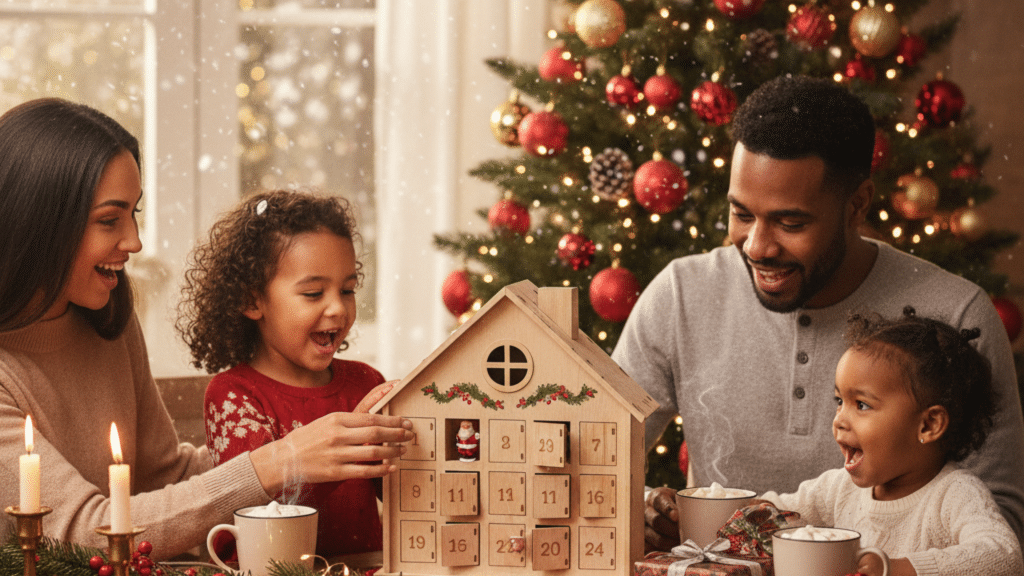
Advent calendars help you mark each day leading to Christmas through small, meaningful daily moments. They combine fun, reflection, and anticipation during the holiday season.
When to Start and End an Advent Calendar
Most Advent calendars begin on December 1 and continue until Christmas Eve or Christmas Day. Some faith-based versions start earlier, following the four Sundays of Advent.
Each date brings a moment of excitement and reflection, helping you slow down and enjoy the season.
Whether it ends on the 24th or 25th, the purpose stays the same: to create a steady rhythm of joy and togetherness as Christmas approaches.
What to Put Inside an Advent Calendar
Behind every door or pocket, there’s a small surprise waiting. Traditional calendars hold chocolates or candies, while others include toys, notes, or Bible verses.
You can personalize yours with daily gratitude prompts, acts of kindness, or small family challenges.
Adults might prefer coffee, tea, or self-care treats. The idea is to fill it with simple joys that bring warmth and meaning to each day of December.
How to Use an Advent Calendar Each Day
Use your Advent calendar to make December more meaningful and joyful for everyone in your home or classroom.
- Begin on December 1 by opening the first section or door.
- Take a moment to enjoy what’s inside and reflect on its meaning.
- Families can read a verse, share a thought, or do one kind act together.
- Kids can look forward to small surprises like toys, candies, or notes.
- Teachers or parents can turn it into a simple learning or gratitude activity.
- Each daily opening builds anticipation, reflection, and connection during the Christmas season.
If your family celebrates Advent as part of faith practice, you can read a short Bible verse each day or say a prayer of gratitude before opening the calendar. This turns the countdown into a daily moment of spiritual reflection.
Different Types of Advent Calendars
Advent calendars have grown beyond simple paper designs, now including creative, themed, and faith-based options for every age and interest.
| Type | Description | Why It’s Popular |
|---|---|---|
| Classic Paper or Chocolate | Traditional calendars with 24–25 doors hiding chocolates or pictures. | Simple, nostalgic, and great for kids. |
| Toy and LEGO | Each day reveals a small toy, puzzle piece, or figure to build a full set. | Encourages creativity and daily excitement. |
| Beauty, Food, and Drink | Include skincare samples, teas, coffees, wines, or gourmet treats. | Ideal for adults who enjoy daily indulgence. |
| Scripture or Activity-Based | Focus on a verse, reflection, or act of kindness each day. | Adds spiritual depth and family connection. |
Today’s Advent calendars blend creativity with meaning, offering joyful ways to celebrate, reflect, and connect during the Christmas countdown.
Innovative DIY Advent Calendar Ideas
Creating your own Advent calendar adds a personal touch to the Christmas season. These ideas let you customize gifts, messages, or activities in meaningful and fun ways.
1. Envelope, Box, or Jar Versions
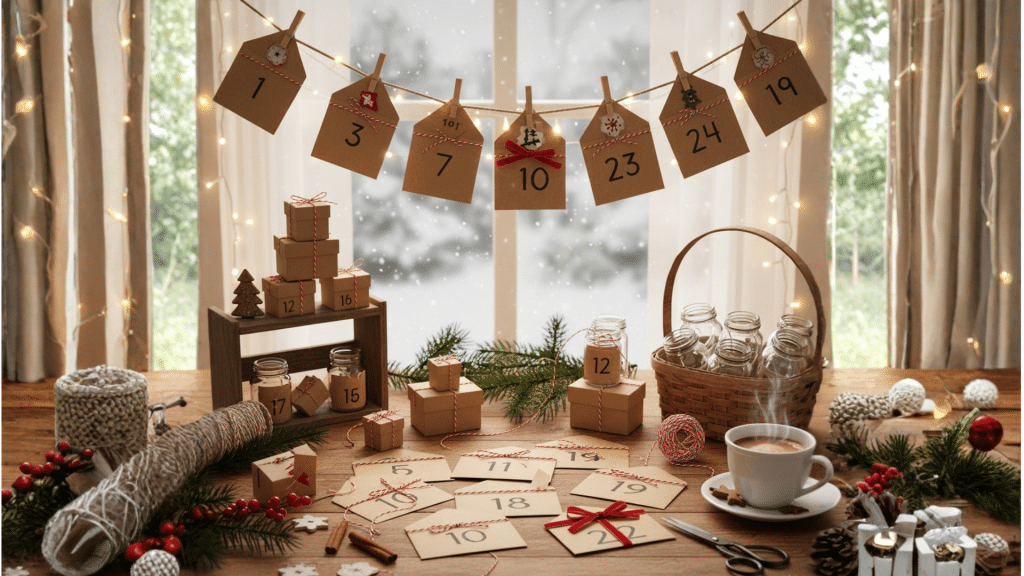
You can make a simple Advent calendar using envelopes, small boxes, or jars. Label each one with numbers from 1 to 24 and fill them with candies, notes, or daily challenges.
Hang envelopes on a string, stack boxes on a shelf, or place jars in a basket. This setup is easy, affordable, and fully customizable.
It’s also great for families who want to create a hands-on experience without needing special supplies,just creativity and a few thoughtful surprises for each day.
2. Reusable Wooden or Fabric Calendars
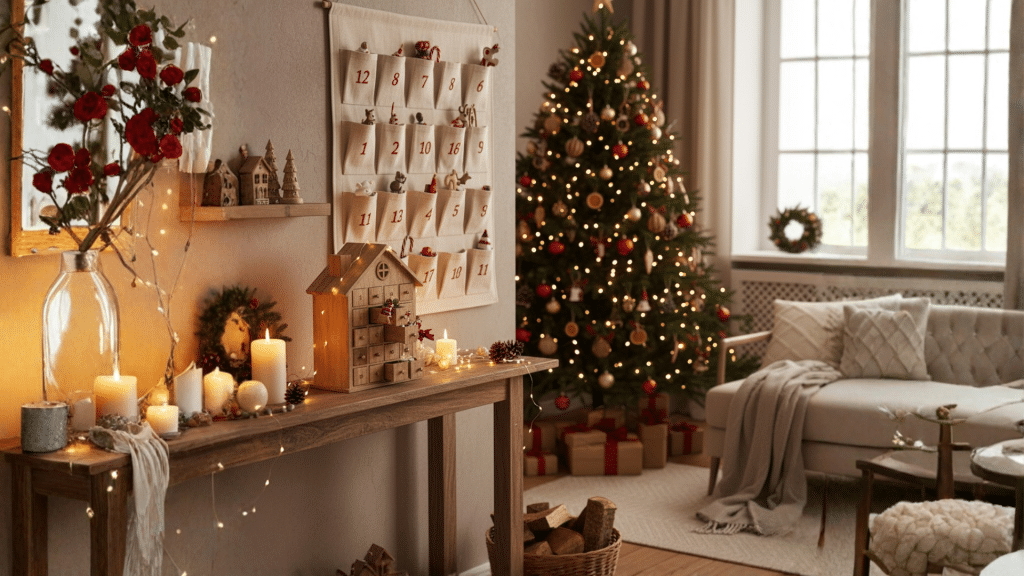
Reusable Advent calendars are perfect for families who want to make a one-time investment that lasts for years.
Wooden calendars often include small drawers or compartments, while fabric versions feature stitched pockets or hanging pouches.
You can fill them with treats, small toys, or daily prompts for reflection. These designs are not only practical but also part of your seasonal décor, giving your home a festive touch. Plus, they reduce waste and can become a cherished family tradition.
3. Acts of Kindness or Gratitude Themes

A kindness-themed Advent calendar focuses on giving rather than receiving. Each day includes a small act, like donating to charity, writing a thank-you note, or helping a neighbor.
Families can also create a gratitude version where everyone shares one thing they’re thankful for each day. These ideas help shift focus from gifts to goodwill, teaching children generosity and empathy.
It’s a meaningful way to celebrate the season while spreading love and positivity throughout your community.
4. Eco-Friendly and Sustainable Options
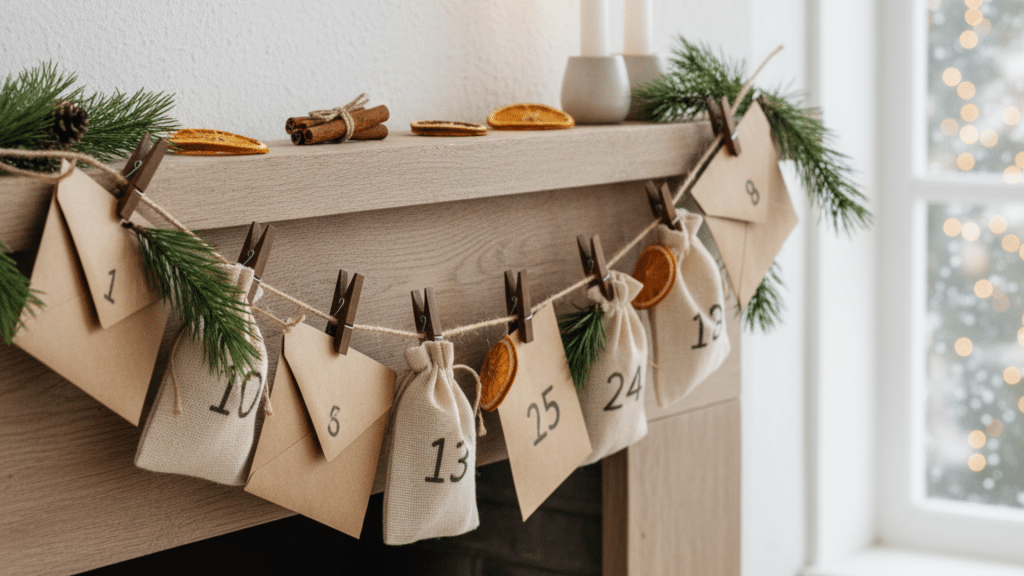
For a greener celebration, design your Advent calendar with sustainability in mind. Use recycled paper, reusable containers, or natural materials like twine, cloth, and wood.
Skip single-use plastics and opt for items you already have at home. You can also fill the calendar with low-waste surprises, such as homemade treats, seed packets, or reusable household items.
An eco-friendly calendar not only reduces waste but also sets a positive example for kids about caring for the planet during the holiday season.
Advent Around the World
Advent calendars are celebrated in many countries, each adding its own cultural touch to the countdown toward Christmas.
Germany: The Original
Germany is where the Advent calendar tradition began in the 19th century. Families once marked days with chalk or candles before printed versions appeared.
Today, handmade wooden calendars and candle-lit decorations remain common. Many German households still honor the original meaning of Advent, reflection and anticipation, while enjoying small daily surprises.
Markets across Germany feature beautifully crafted calendars, preserving both history and craftsmanship in this cherished holiday tradition that has since inspired the world.
UK & US: Modern Variations
In the United Kingdom and the United States, Advent calendars have taken on a more commercial yet joyful twist. Chocolate-filled versions remain a staple, but newer ones feature toys, books, teas, or skincare samples.
Many families use them to create small daily celebrations leading up to Christmas.
Online retailers now offer digital or themed calendars, from movie-based designs to luxury editions. These modern adaptations keep the spirit alive, balancing fun, nostalgia, and anticipation through the festive season.
Scandinavia & Beyond: Local Twists
In Scandinavian countries like Sweden, Norway, and Denmark, Advent is marked by simplicity and warmth. Families use candles, handmade crafts, and wooden decorations to celebrate each day.
TV and radio stations even broadcast “Advent calendar shows” for children, revealing a new story or surprise daily.
Beyond Scandinavia, countries like France and Italy celebrate with music, community gatherings, and devotionals. Each region brings its unique flavor, but all share the same purpose: preparing hearts for Christmas with joy and togetherness.
Final Thoughts
Advent calendars remind you that Christmas isn’t just about one day; it’s about enjoying the little moments leading up to it.
From their humble beginnings in Germany to today’s creative designs, they continue to bring joy, reflection, and togetherness.
If you buy one or make your own, the tradition encourages slowing down and finding gratitude in every day of December. I hope this helps you see how meaningful this countdown can be.
How do you plan to celebrate with your Advent calendar this year? Take a look at my other Christmas guides for more simple, heartfelt ideas to make your season brighter.